
Chittagong Customs House
Litigation under the Sea Customs Act, 1878

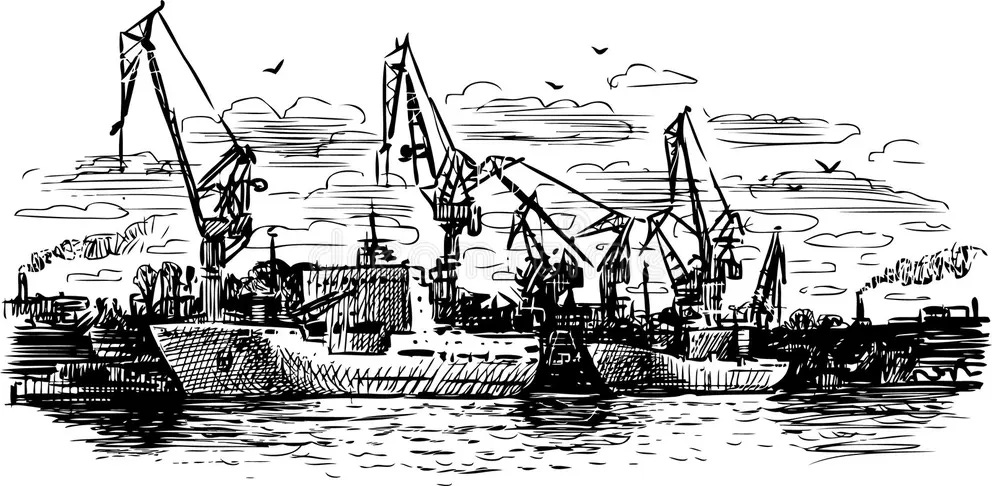
The Sea Customs Act was enacted by the British in 1878 to govern ports, wharfs and customs houses. The customs house is responsible for tax collection in a port. The Port of Chittagong, which was the principal maritime gateway of eastern Bengal and Assam under the British Raj, was re-organized in 1887. A commissioner was appointed under the Port Commissioners Act in 1888. It was declared as a ‘major port’ in 1928 due to the growth of shipping and trade. After the partition of India, the importance of Chittagong Port grew manifold as the gateway to East Pakistan.
Dr. Kamal Hossain represented customs brokers of the Port of Chittagong against the revenue authority in East Pakistan in 1966. Customs brokers facilitate tax collection for export-import trade by taking care of documentation, tax bills, shipping bills, compliance, clearance and ensuring the efficient transport of goods from the port. They are known as Customs House Agents (CHAs) who receive a license from the Chittagong Customs House.
A change to the licensing rules of Customs House Agents caused a rupture in the relationship between the brokers and the revenue authority. A dispute arose over whether the brokers needed to renew their license under the new rules. The brokers were told that their license would be renewed on a conditional basis. The brokers challenged the conditions in court.
An application for judicial review was filed. The intent of the petition was to secure a ruling from the court seeking the removal of any conditions in a renewal application.
Let a Rule Nisi issue calling upon the Respondents to show cause why the impugned condition for renewal of the petitioner's license granted under section 202 of the Sea Customs Act, 1878 sought to be made on the petitioner by notice No 14 dated 24. 9. 1965 issued by and or under the authority of the Respondents should not be declared as having been imposed without lawful authority and of no legal effect and why they should not be directed to refrain from imposing the impugned condition on the petitioner; why the imposition of conditions for renewal of license provided by the 1965 Rules on the petitioner, to the extent to which the said conditions are inconsistent with the conditions for renewal provided by the 1957 Rules, should not be declared to have been made without lawful authority and of no legal effect, or such other or further order or orders made as to this Court may seem fit and proper.
The Custom House Agents (Licensing) Rules of 1957 (referred to as the ‘1957 Rules’) were superseded by the new rules adopted in 1965 (referred to as the ‘1965 Rules’). The court held that the 1957 Rules could no longer be applied in the year 1966, given that the 1965 Rules had taken affect. A fresh application for each broker had to be made under the 1965 Rules. It would not be possible to renew any license since the 1957 Rules were no longer in force. Moreover, the 1965 Rules could not be applied retrospectively, thereby necessitating the need for fresh licenses to be issued.
Footnotes
Ebadur Rahman Vs. Collector of Customs, Customs House Chittagong and Assistant Collector of Customs (for licenses), Customs House, Chittagong 18 DLR (1966) 651
 | A guest post by
|